Aster: Building an AI-Native Career Platform
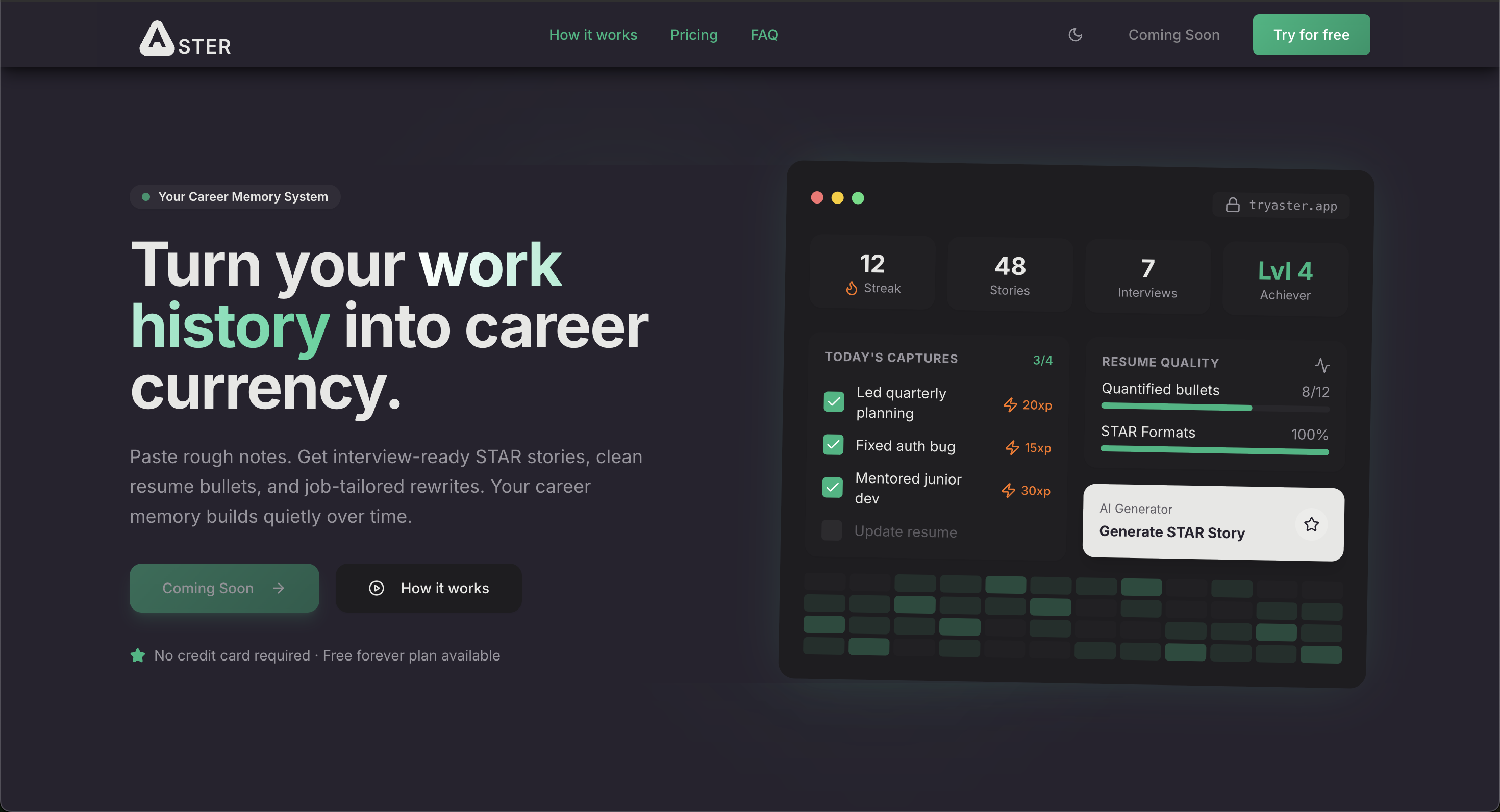
Founder-led AI-powered career platform centered on persistent career memory and AI-generated reports and resumes, built from zero to a live product.
Visit tryaster.appContext
Aster started as a response to a repeated pattern: most "AI resume tools" automate applications but do little to improve a person's long-term career trajectory.
My cofounder led much of the interview-driven product discovery and research work. I supported with competitor analysis, technical feasibility framing, and translating findings into MVP scope and implementation decisions.
In strategy sessions during July 2025, we aligned on a different thesis: the real pain point is not resume writing alone. It is preserving career signal over time and turning that history into reusable outputs for sustained career growth.
From that insight, Aster evolved into a broader AI-powered career operating system rather than a document generator.
Problem / Market Insight
Based on cofounder-led user interviews plus our competitive audits, we identified that people struggle to consistently capture accomplishments, recall concrete impact when it matters, know what to improve, and understand promotion benchmarks.
Resume tools are increasingly commoditized, while generic AI tools like ChatGPT lack persistent memory and personalization. Career growth is episodic, so most tools fail to become sticky.
Strategic direction: build differentiated workflows around persistent career memory, generate high-signal outputs from that memory, add gamification through resume scoring, and use personalization to make the product sticky over time.
Founder Ownership & Scope
As Co-Founder and Full-Stack Builder, my primary ownership was full-stack architecture and implementation. My cofounder handled much of the user interviews and product research, while I supported synthesis and translated insights into MVP scope, product behavior, and technical decisions.
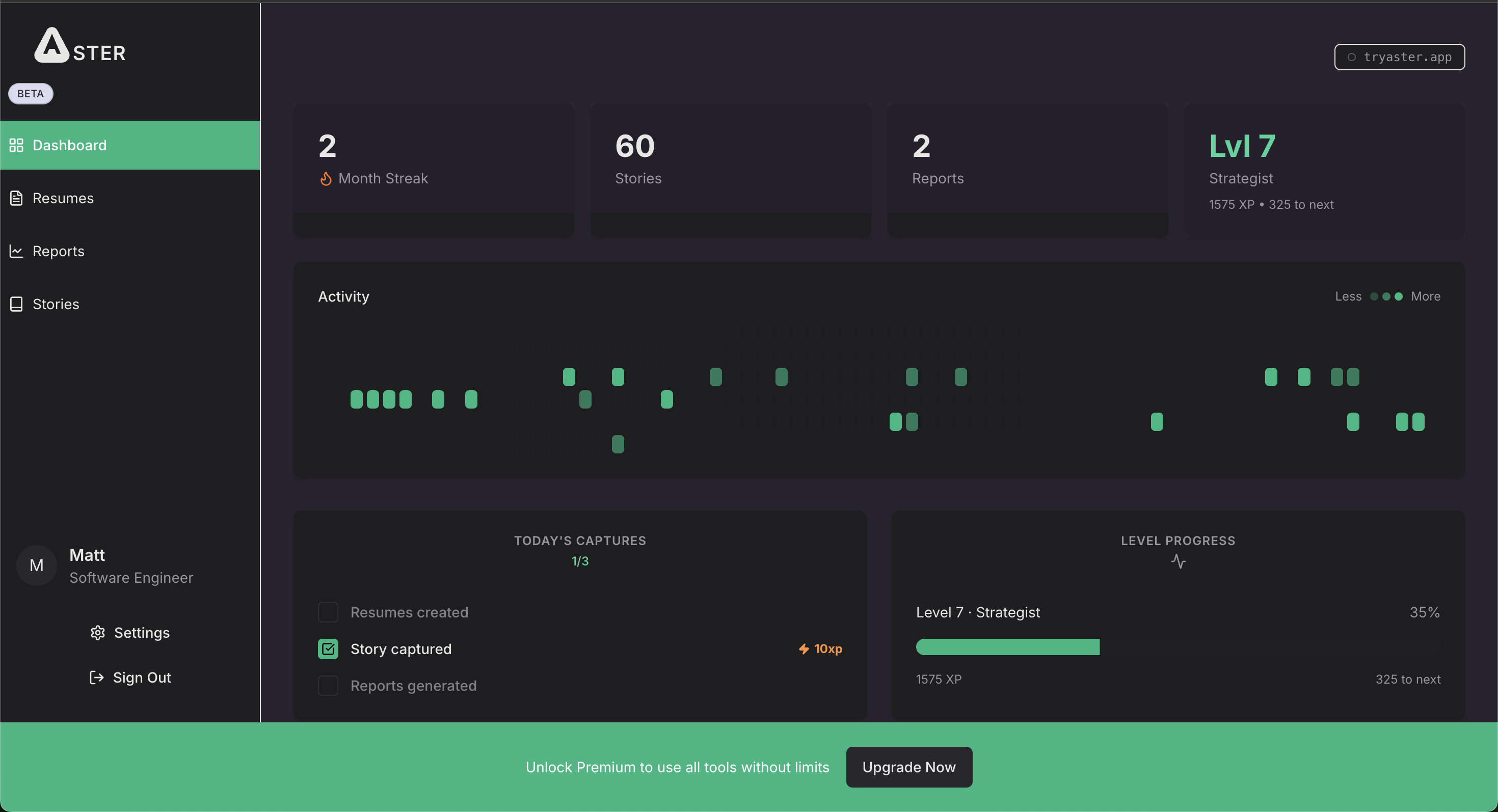
Product strategy and UX support. Co-shaped landing page positioning, freemium packaging (Free / Premium), onboarding and dashboard UX direction, and the sticky roadmap around memory capture plus reusable output generation based on discovery insights.
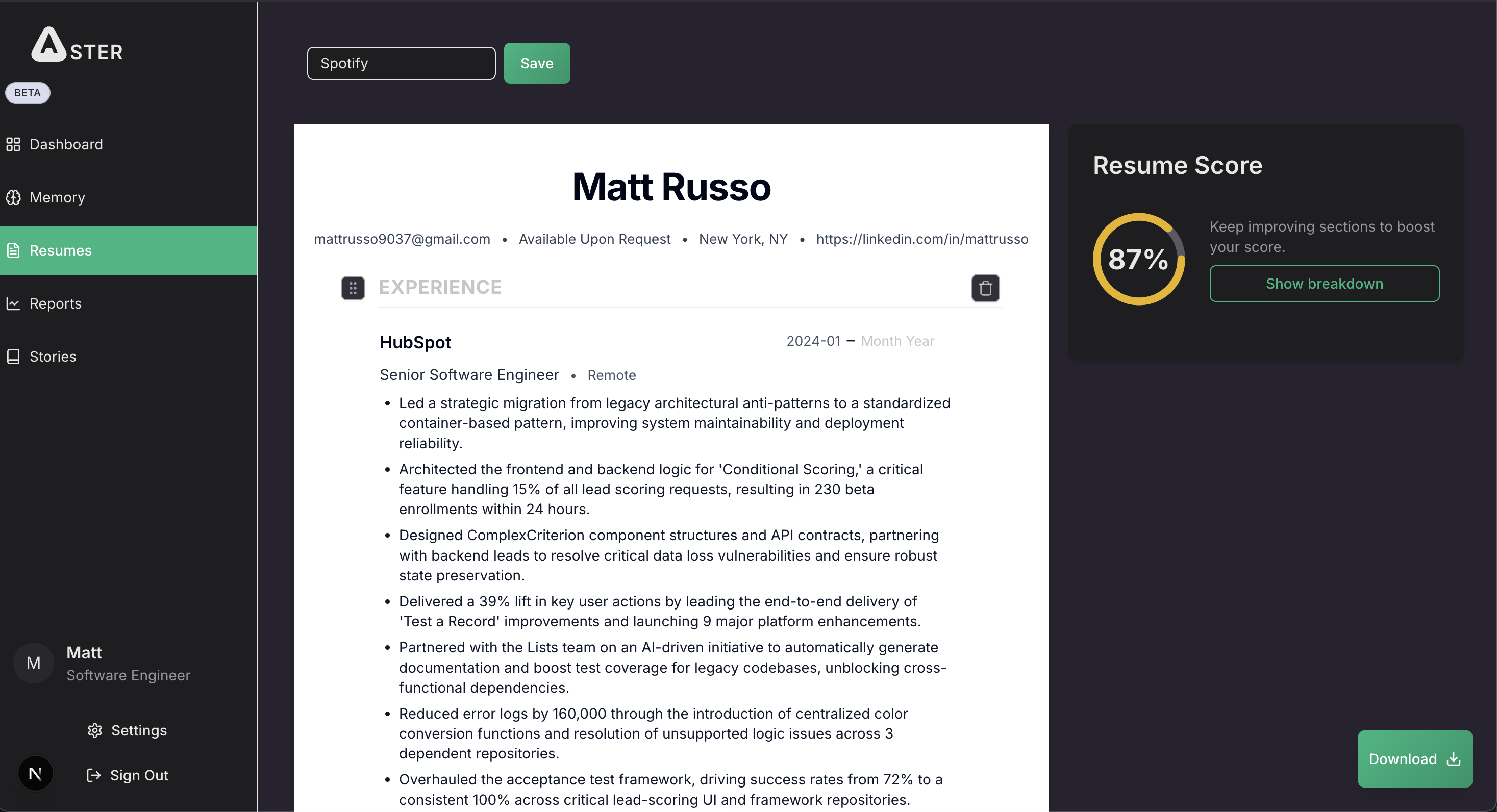
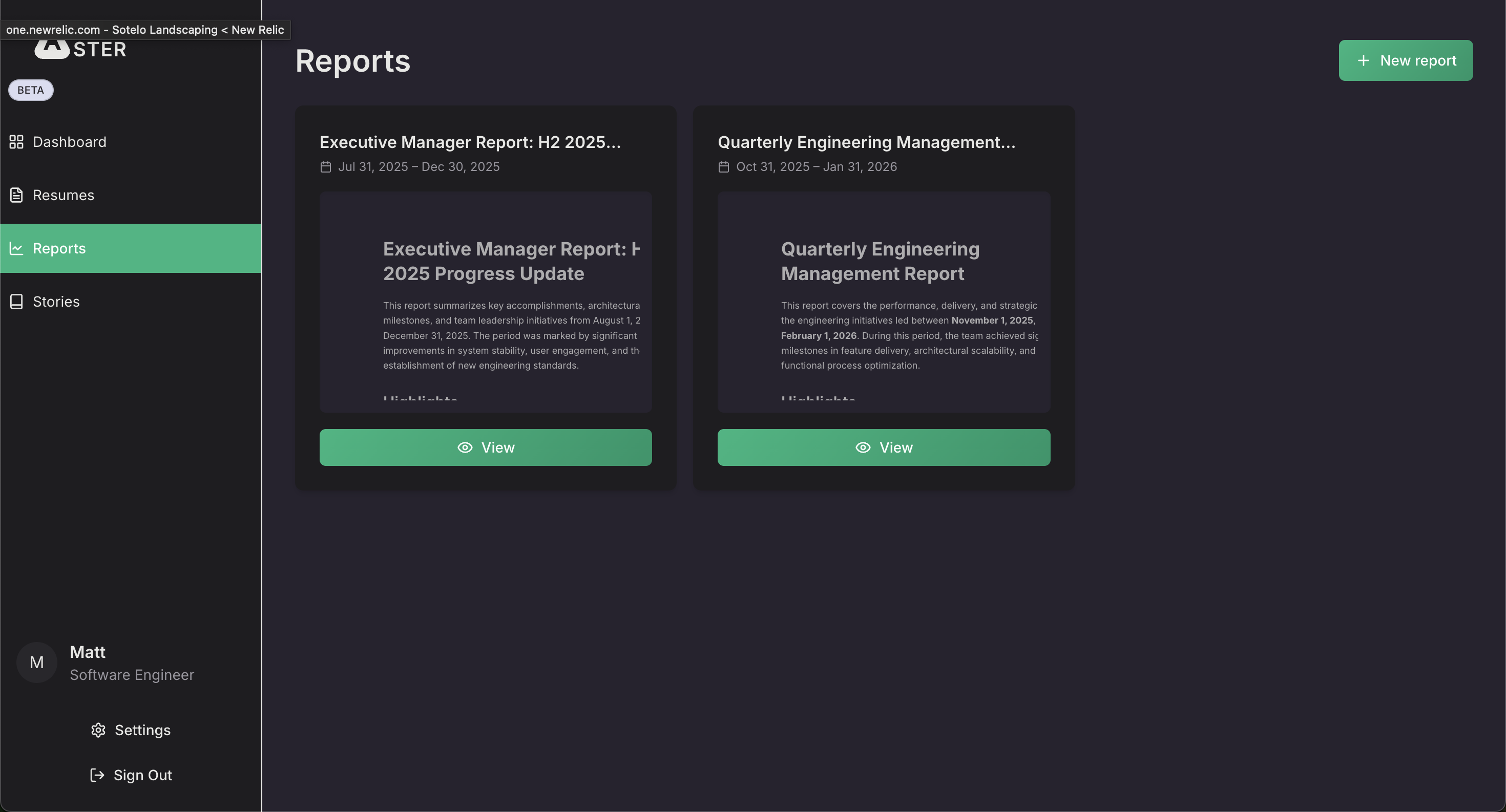
Frontend architecture. Built the application in Next.js and TypeScript with a modular tool architecture centered on memory capture, report generation, and resume generation, plus real-time resume scoring with UI suggestions, context-aware onboarding flows, and dashboard personalization for career progression views.
Backend architecture. Designed a DynamoDB schema with owner-based partitioning and GSIs to avoid table scans, modeled one-to-many user relationships (accomplishments, resumes), and documented future extensibility for interview sessions and end-of-year reports.
Infrastructure. Planned and implemented a code-first serverless stack with AWS Amplify Gen 2, DynamoDB, Cognito auth, serverless compute, and S3 storage, plus early-stage cost modeling at roughly $15/month. Stripe was scoped as the planned subscription flow.
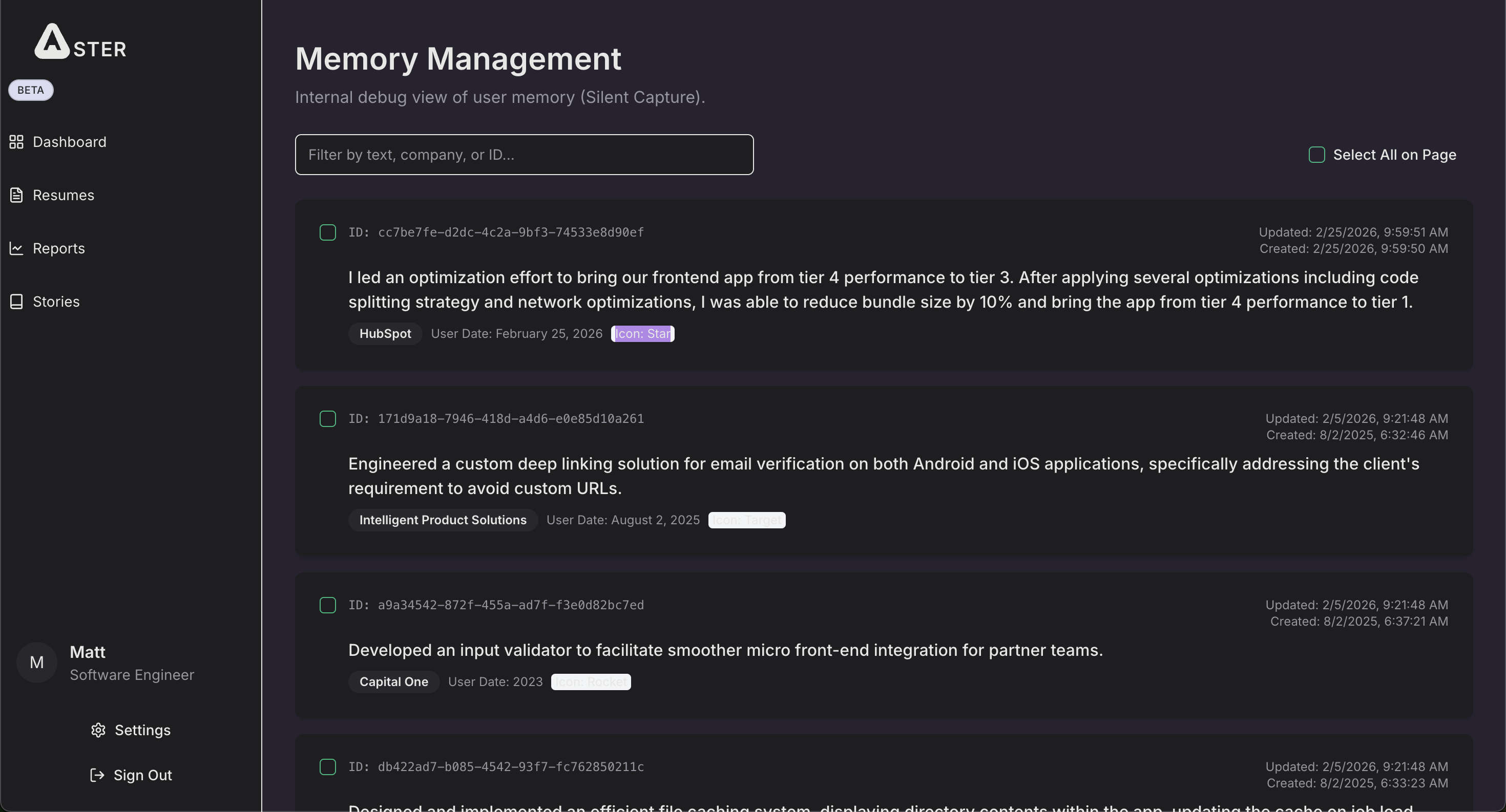
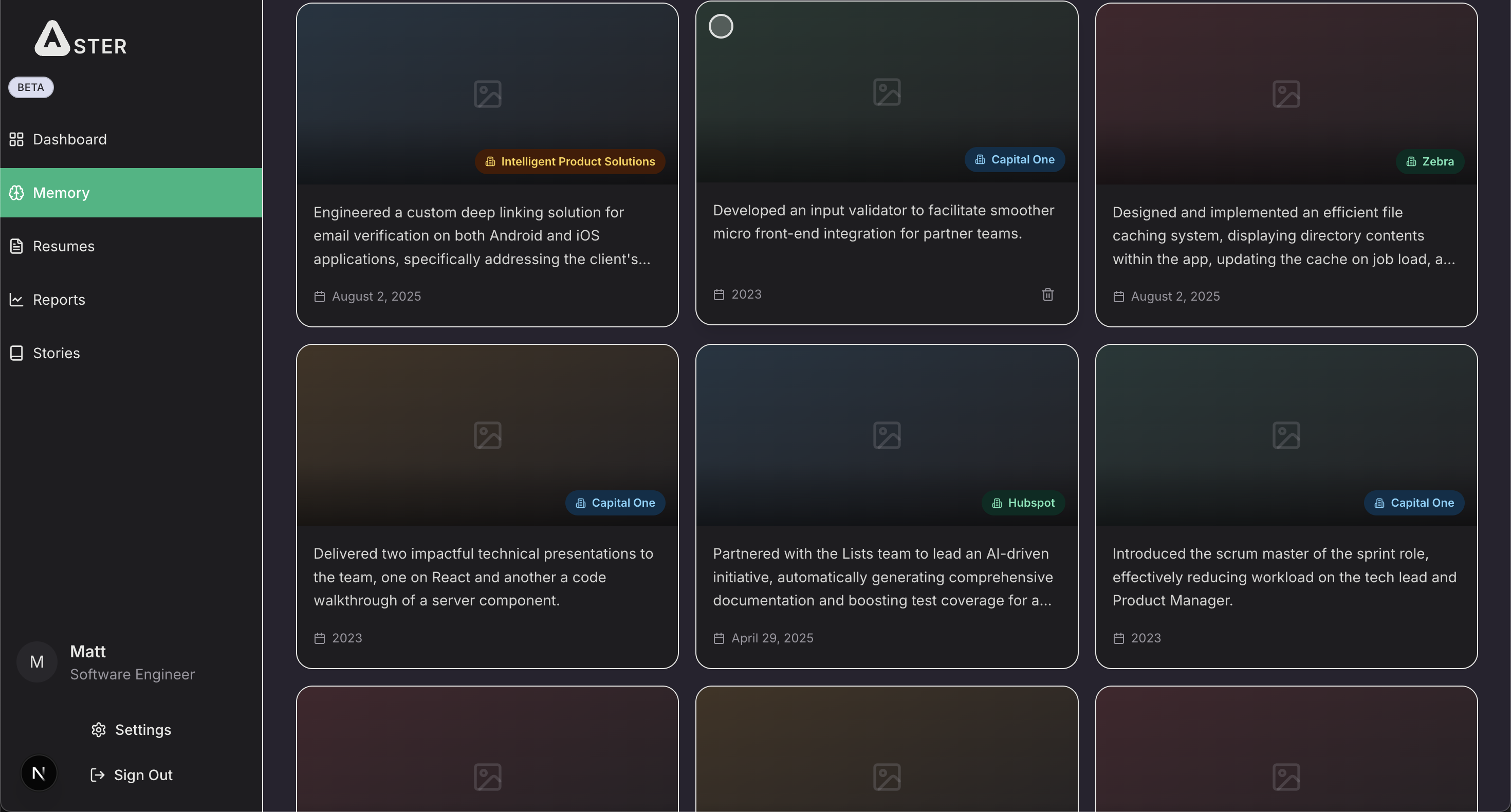
AI systems. Built resume tailoring, job description parsing, report generation workflows powered by persistent career memory, resume scoring logic inspired by lead scoring frameworks, and a context persistence "memory" system used to personalize outputs over time.
Key Product Decisions / Tradeoffs
1. Differentiation over saturation. Instead of competing on a "better resume builder," I prioritized persistent career memory, report generation, and gamified scoring. The tradeoff was higher complexity and a slower MVP, but with stronger long-term defensibility.
2. Sticky product vs one-time utility. Aster was designed as an ongoing career progression engine with accomplishment memory, reusable output generation, and improvement loops rather than a transactional tool. The tradeoff was deeper onboarding and more data capture requirements.
3. Freemium model strategy. The MVP defined Free (limited usage) and Premium ($10/month, unlimited access). The tradeoff was careful usage throttling and a stronger need to establish value before the paywall.
4. Secure-first architecture. I prioritized owner-based data partitioning, scalable DynamoDB access patterns, future-proof index design, and cost planning. The tradeoff was extra upfront design work and slower initial iteration.
MVP Scope
The defined MVP focused on accomplishment memory capture plus AI-generated outputs: reports and resumes. It also included resume scoring, smart file naming, and a Free vs Premium model.
Scope was intentionally focused on shipping a differentiated core loop while keeping the architecture extensible for additional memory-powered outputs over time.
Outcome
Live deployed application at tryaster.app with a functional AI tooling suite, defined monetization model, clear differentiation strategy, and a production-grade backend architecture.
The MVP was positioned for early user acquisition in the 10-100 user phase with a clear path to expand into sticky, memory-powered career workflows and recurring product value.
Aster demonstrates founder-level product thinking, market-driven prioritization, full-stack ownership from landing page to DynamoDB key design, AI system integration beyond prompt wrappers, and infrastructure planning for scale.